
Pictures for this blog will be more to the bottom of the discussion.
I am sure the first question for most is what is a Polychronic culture. When I was preparing to enter the mission field many of the books that were recommended talked about cultural differences and every one of them dealt with some form of time vs relationship based cultures. A time based culture is called a monochronic culture and one that is NOT based on time is called a polychronic culture. The USA is obviously considered a monochronic culture because we value time as a commodity. Even if you are looking at your teenager scrolling their phone watching videos, you think they are wasting time which means it is a commodity to you if it can be wasted. We are the “Time is money” type culture like most of the western world.
A polychronic culture sees time as a vast resource that is fluid and flexible. They tend to not value time as a commodity but instead see it as something they have more than enough of and need not worry about being constrained to a schedule. Most countries along this path tend to not have great transportation systems meaning you get there when you get there. In these cultures it is not uncommon to see someone who has stopped during their travels to lay down and rest along the road they are walking. The majority of these type cultures tend to value experiences and relationships more. They often spend an entire day sitting with someone talking and not thinking about where they need to be.
It has been hard for me to lock Tanzania into one of these cultures. They are definitely not a time based society or culture. It is difficult to bring in equipment that would speed up a harvest or plant or even moving sand and rock from one area into a useful construction material. They still mainly use shovels to load dump trucks with sand instead of backhoes or bobcats. They break rock from large boulders to small aggregate for concrete using hammers (the small ones for nails).
But at the same time, I have trouble saying they are relationship based. This is a country where everyone you meet is your friend which also means you consider everyone your friend even though you just sat next to them on a bus. Friend here means a lot lower level of connection than it does in a time based society where you build strong relationships with a smaller group of friends. My “friends” here would be more along the line of business associates in the states. Here you can’t get past the answer “I am fine” because you have too many “friends” to actually communicate about what is going on in your life.
So how do I, a time based person, explain to a time based audience what it is like to live in a non time based society/culture. I am going to describe the events of a wedding I recently attended for one of our teachers. The process actually starts the week before the wedding, when a teacher who is fairly new to the school and is only a person I share greetings with because when I try to talk to him about anything else he gets lost on a discussion that moves past the “I am fine” stage. For example I have asked about his martial status in the past and he never told me he was not married yet. So when he came into my office to tell me he was getting married I was a little surprised he was not already. This is the first couple of big differences in a non time based culture. His invitation to the wedding was more about asking me to contribute money to the wedding and honeymoon than actually about asking me to come. It is common here for the community to pay for the wedding and the honeymoon and still give gifts and since I am the only white person he knows I am expected to contribute a large sum to these events. Most of his fellow teachers contributed 15,000 TSH ($6) but when the headmaster came to ask me for money the request was 200,000 TSH and to pay for the hotel on their honeymoon. Needless to say, I live on a stipend here so I can’t actually contribute that much and they know that but they assume I will anyway. The second big difference is that most people I know in the states have to use their vacation time for a honeymoon and or schedule it for a break in the work schedule. Not here, you never schedule time off events for times you would normally have time off, you schedule where you have to get extra paid time off for your event.
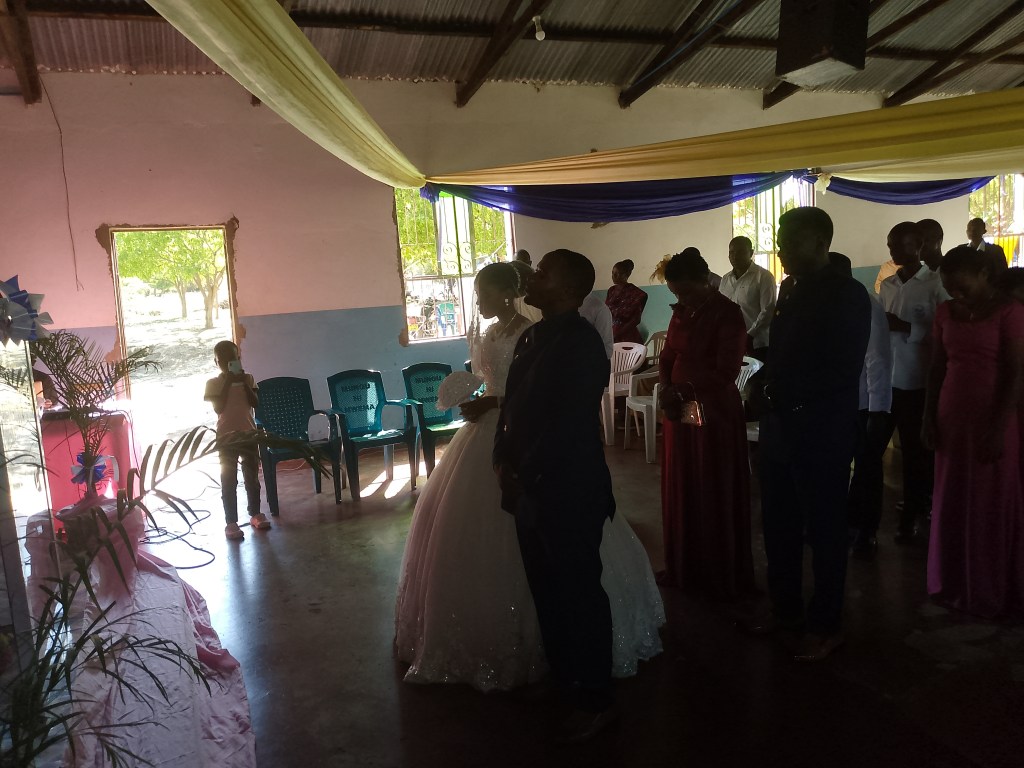
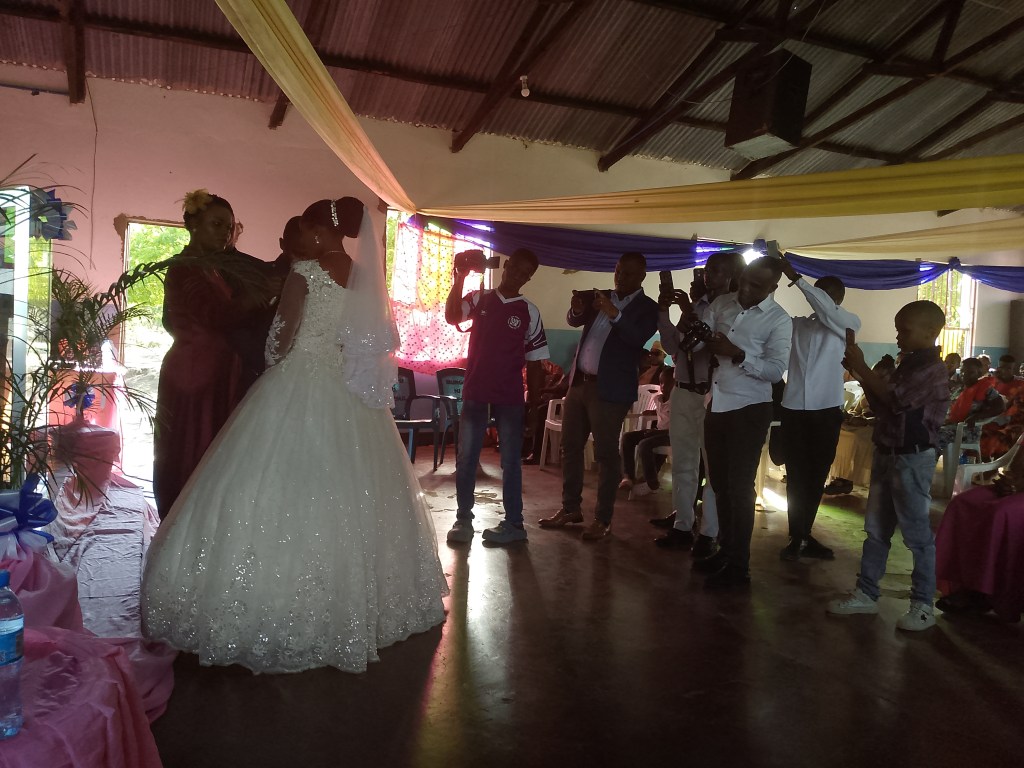
The day of the wedding rolls around and I still have not heard what time or where it will take place. Since I am familiar with the lack of communication, I choose to ride with the Bishop who would be officiating the service so at least he would know. I got down to his house about noon since most weddings start early afternoon so they can finish up before midnight. He had an actual invitation that said it started at 1 PM and would be at the Msitu wa Tembo TAG church about 25 minutes drive away. Don’t worry about us being late, he is just starting lunch and asked me to join. We found out the bridal party left to go to Moshi (an hour away) while we were eating lunch to go to the hair saloon. After lunch we sat around and waited. About 2:30 PM he and his wife started to get ready to go. At 3 PM we get word the bridal party is leaving the hair saloon to head back. We left and got to the church at 3:30 PM and sat around outside with everyone else. About 4 PM we all went inside and the ceremony technically started and stopped a couple of times because there was a lot of confusion about who is doing what and what song is each family supposed to dance into the proceeding with. Since I came with the Bishop, I had to sit at the pastor’s area facing the assembly instead of my favorite seat near the back away from the speakers.
The wedding party and their families all danced in. Then the groom, bride, best man and brides maid sat down in seats facing a different direction. The Bishop then got up to deliver a sermon. A normal sermon, a normal Tanzanian sermon of 1 hour. This was followed by the choir singing while they collected tithes. The ceremony finished up about 4:45 PM with the wedding party departing to TPC (30 minutes away) for photos and everyone at the wedding going outside to sit again. At roughly 6:45 we had to all dance back into the church in various groups. The wedding party arrived about 15 minutes later. There was no reception type dancing though specific groups did get up to dance in with the bride or to entertain then the choir lip-synced and danced to a song. They did a cake cutting with each family getting their own cake and the minister’s table getting their own cake. There were introductions of all the family members, all the various individuals attending, the ministers and the mzungu (white dude though the actual meaning is someone from Europe) At 9:30 PM they served dinner. One important note is that the kids were last to be allowed to get food in their culture so most of them did not get dinner until about 10PM. We left about 10:30 and got back home around 11 PM. The party with all the kids including the preschoolers who were there was still going on when we left.
I did get to see some of our kids outside of school that I normally do not get to see because they are bused in to the school.

Students from Tumaini that were there


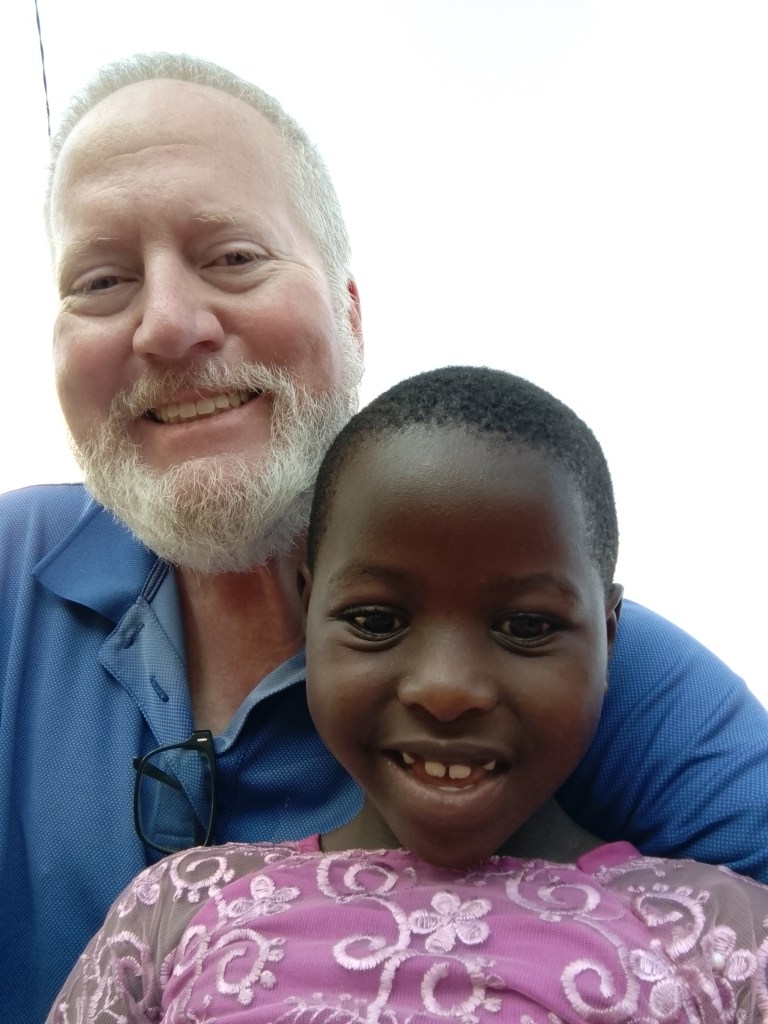
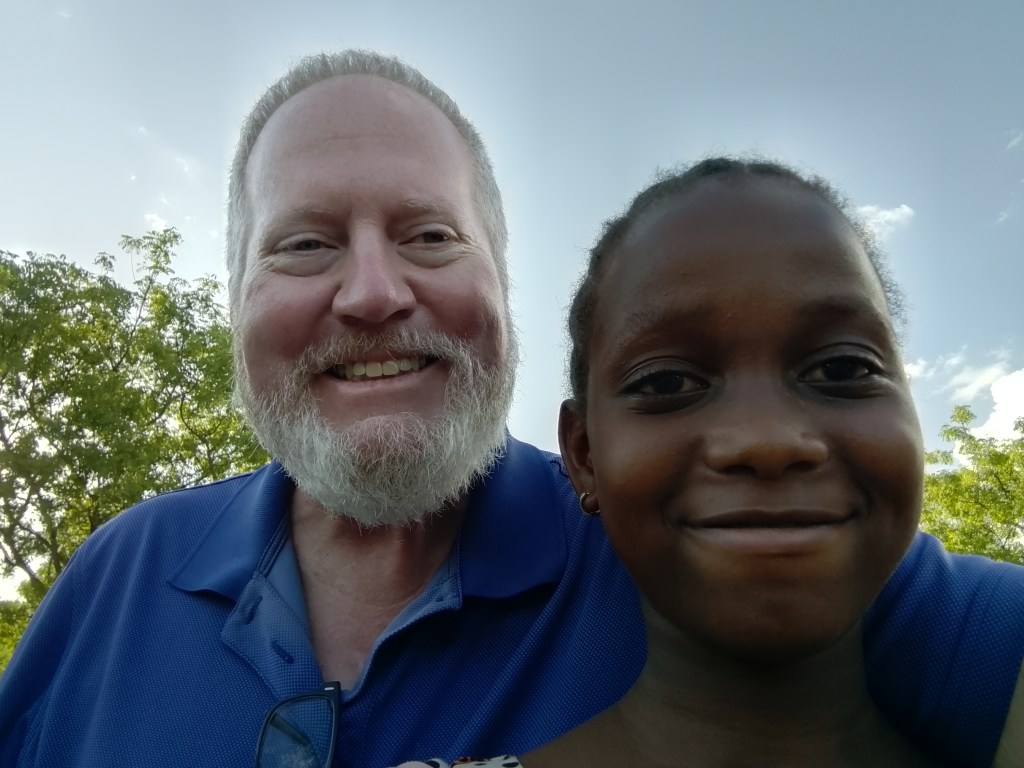
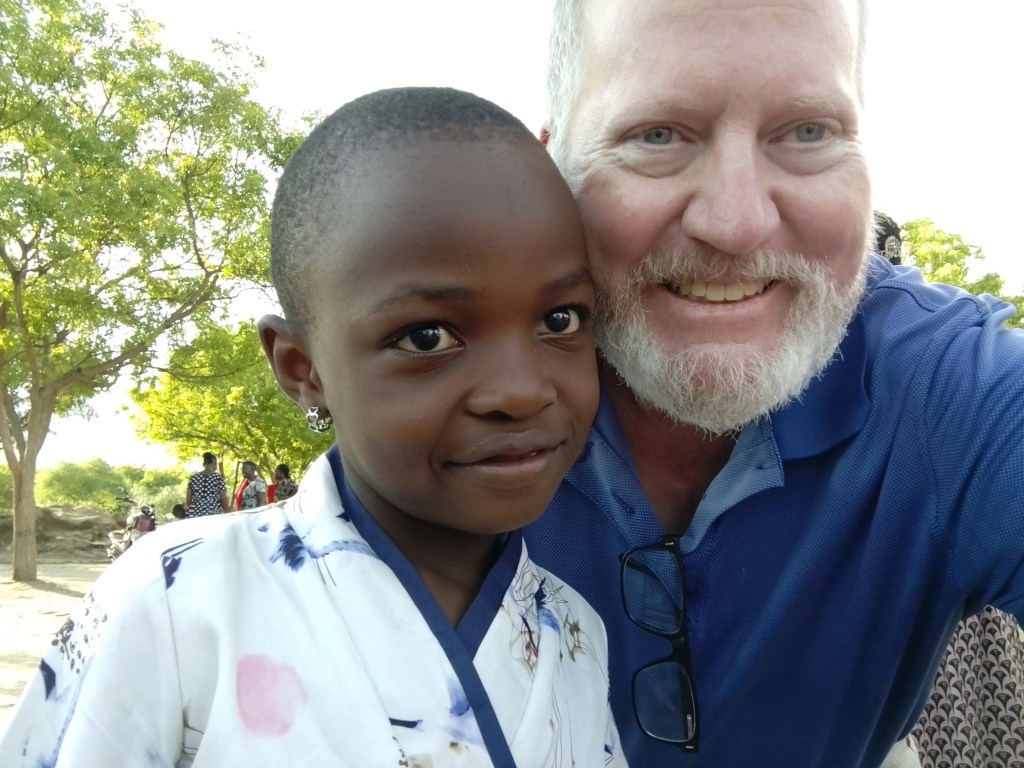
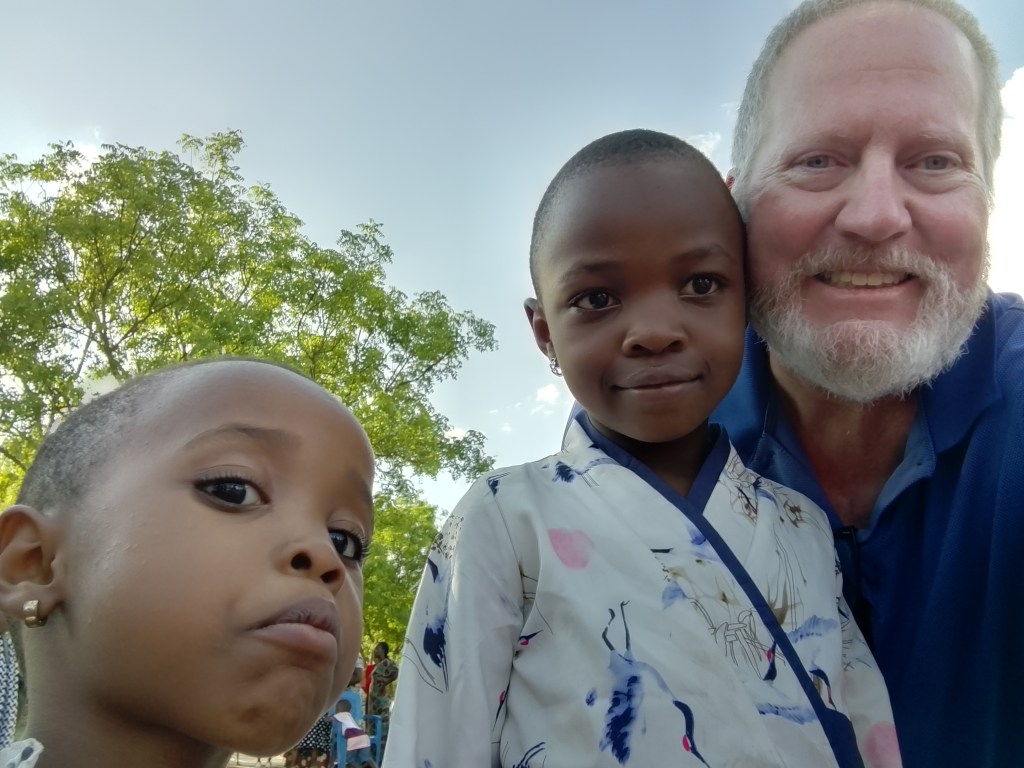


and the twins


 Steve and Barnabas