
The topic for this blog is one that is tough but necessary discussion. This applies to both my female and male readers, so please don’t log out just because you don’t think this applies to you, because ignoring the issues only make the problems continue instead of the solutions. I will apologize, I had hoped to have a guest writer for this blog but that fell through. Why? I thought you would like to hear from one of our girls who has been given menstrual health training as well as received the reusable sanitary pads we distributed. I thought she could speak to this subject much better than I, a male, could not. It fell through because of the cultural gaps in communication more than the language gaps. The teacher I asked to help with this never really understood I wanted to hear from the student (the teacher kept writing the piece) or that I wanted how she felt about what was provided. The first piece was an excellent biology report that described the female period. I am not sure what the second piece was really from but it was not about what I asked for. (another blog I will discuss the lack of self thinking in the school system here)
I did get some good quotes I will use later on from the girls at one of the government schools. First let’s talk about why and what the program is about. First the why. From UNICEF’s Menstrual Health and Hygiene Situation Among Schoolgirls in Tanzania, A Brief Report, 78.8 percent of girls on the mainland of Tanzania miss school during their menstruation. Of those 42% said lack of menstruation products and another 34% said embarrassment due to visible stains were the reasons for missing school. Google’s friendly AI says that 91% of rural shops do not sell sanitary pads and when they do it will often cost as much as 6700 shillings for one (basically 3% of the family income for a month in our area). They will often use old clothes, rags, leaves or carpet. All of which are unsanitary and can lead to infections. Menstrual education is also missing leaving many girls feeling ashamed.

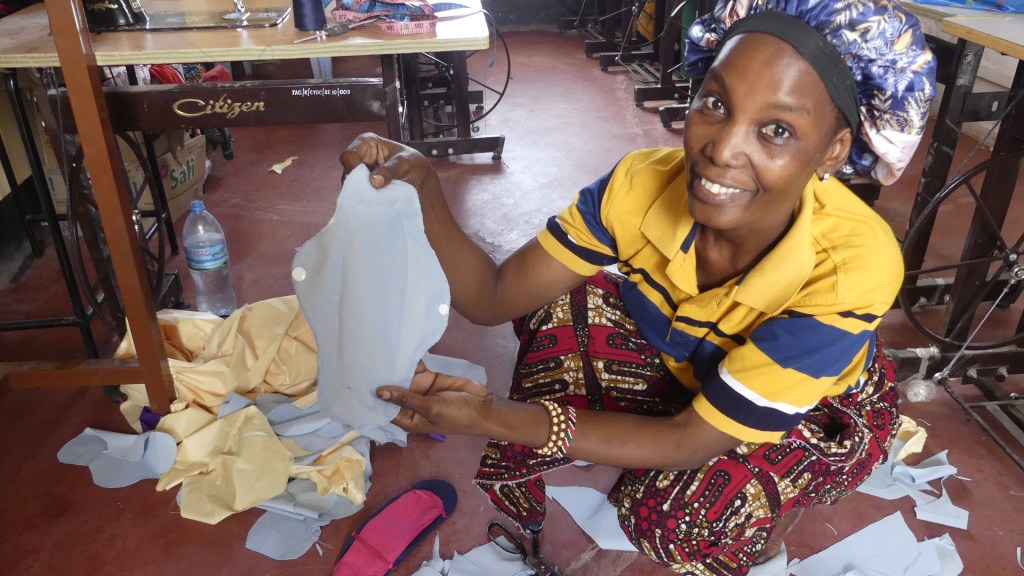
I will be honest here and admit, this is not something I recognized as a problem on my own. I first learned about this when I was in Singida and hanging out with many of the female Peace Corps Volunteers who were getting these type of Reusable Sanitary Pads from Kenya through their organization. Unfortunately they would not sell to a missionary or small mission project. I forgot about it until we started our Sewing ministry with the help of some folks in Florida. But for the last two years I have been concerned about it and started noticing some of our girls were missing school regularly. Girls who are top of the class and enjoy school. So I showed the sewing ministry some YouTube videos of how to make the reusable sanitary pads and got a price. The idea is they would make and provide them (distribute) to all the girls in our area who have reached puberty regardless of whether they were in our school. The pastor’s wife agreed to provide training and basic menstrual health education along with the distribution. The key is I did not want to be involved in the distribution or be seen as involved (women really don’t need another man solving their problems right-I wanted the community to appear to solve the problem). Blessed2BlessU Ministries, Inc. got on board and supported the idea. They donated the money to provide 190 kits to the girls in our area for around $1500.

Some of those comments I mentioned earlier from the local government school nearby:
(the pads) protect our health and gives us safety-Gladness Lembris
Thank you for giving us pads now we can read without fearness (fear or embarrassment)-Mary Kyara
It help us to come to school by (with) confidence-No name given
(the pads) protect our health-Christina Simon
It helps us not be ashamed when we are in menstruation cycle Esther Justicce
 Steve and Barnabas